Botanical Distillation, CO2 Extraction & Concrete Processing
Raw-material monographs comparing steam hydrodistillation, supercritical CO2 extraction, and volatile-solvent concrete fractionation across Madagascar blue-black pepper, Florentine orris root, and Atlas cedarwood.
Technical baseline derived from Grasse fractionation benchmarks and PerfumerSearch Reference Archive.
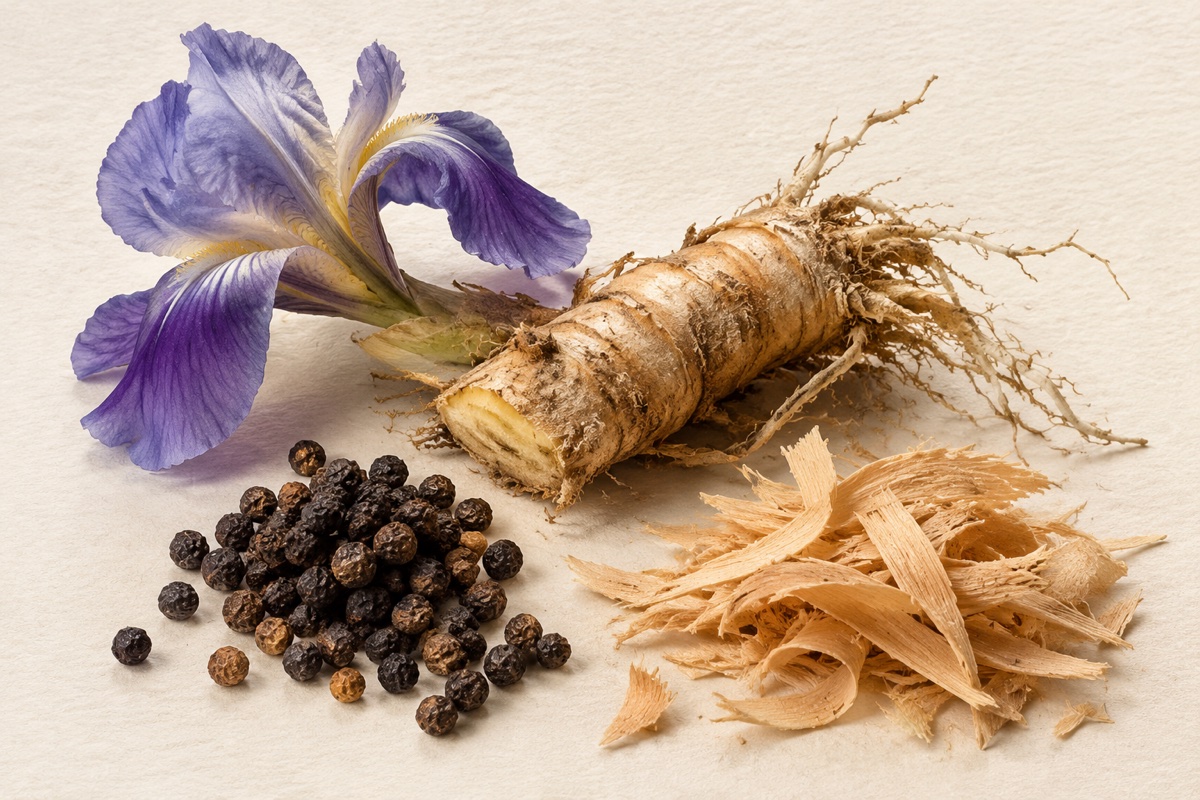
Madagascar Piper borbonense (Voatsiperifery) & Piper nigrum
Wild Piper borbonense lianas harvested in southeastern Madagascar rainforests yield a berry prized in contemporary fine perfumery for its cool mineral, camphoraceous-citrus top note and woody-phenolic drydown. Unlike standard black pepper (Piper nigrum), whose steam-distilled essential oil is dominated by beta-caryophyllene, alpha-pinene, and limonene at yields near 1.8% to 2.5%, supercritical CO2 extraction of Madagascar pepper captures higher-boiling oxygenated sesquiterpenes and pungent piperine-adjacent fractions without scorched hydrolysis notes.
In formulation, CO2 pepper extracts inject immediate vertical lift into citrus-woody openings without darkening the liquid color of clear flacons. However, high natural limonene fractions (often 14% to 21% of the volatile oil) require strict antioxidant stabilization with tocopherol or BHT to prevent peroxide formation above the IFRA 20 mmol/L threshold.
Florentine Iris pallida Rhizome Curing & Irone Formation
Freshly dug Iris pallida rhizomes are virtually odorless. Only after peeling, slicing, and drying in terracotta-ventilated lofts for three full years do oxidative cleavage reactions convert triterpenoid iripallidal precursors into alpha-irone, cis-gamma-irone, and cis-alpha-irone. Steam distillation of the milled root yields a waxy solid at ambient temperature known as orris butter (beurre d'iris), containing up to 80% myristic acid alongside 8% to 18% active irones.
Because myristic acid contributes zero odor while clouding chilled alcohol solutions, perfumers frequently purchase molecularly distilled or absolue-grade irones standardized at 15% or 85% purity. While 85% irone fractions sharpen cold metallic violet austerity, unfractionated 15% orris butter imparts an irreplaceable suede, biscuit, and root-earth cushion around rose and frankincense.
Atlas Cedarwood (Cedrus atlantica) vs. Virginia Cedarwood
Perfumers distinguish sharply between Middle Atlas Moroccan Cedrus atlantica (a true cedar rich in alpha- and beta-himachalene and warm amber-leather atlantones) and North American Juniperus virginiana (a juniper whose heartwood oil is dominated by cedrol, cedrene, and dry pencil-shaving thujopsene). Steam distillation of aged Atlas sawdust yields 3.0% to 4.5% viscous amber oil prized for velvety drydowns, whereas fractional vacuum rectification isolates pure cedrol crystals for structural woody fixation.
Extraction Method Comparison Matrix
| Extraction Process | Operating Temp / Pressure | Typical Yield | Olfactory Fidelity & Solvent Residue |
|---|---|---|---|
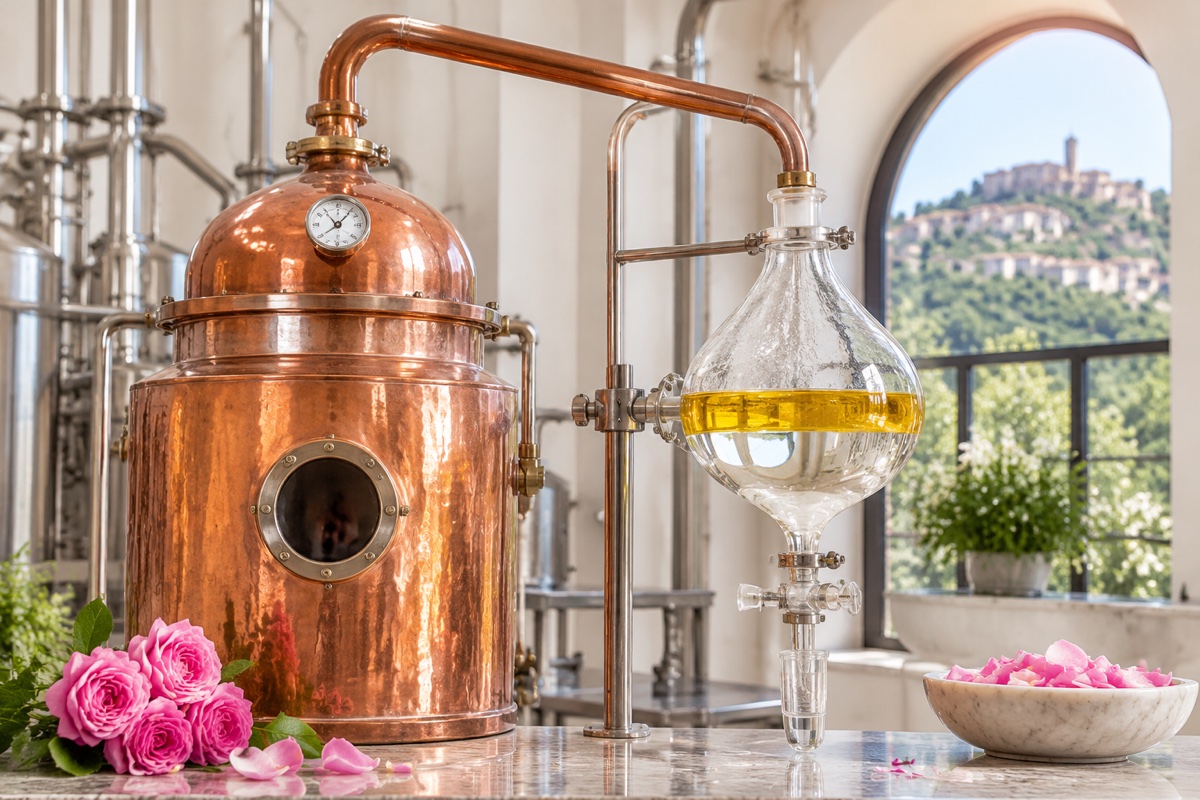
| Steam Hydrodistillation | 98 C to 105 C / 1 atm | 0.03% (Rose) to 3.5% (Cedar) | Bright, volatile; thermal hydrolysis of delicate esters; zero solvent |
| Supercritical CO2 (Select) | 31 C to 42 C / 90 to 140 bar | 2.0% to 5.5% (Spices) | True-to-botanical top/heart profile; CO2 evaporates cleanly (<1 ppm) |
| Hexane Concrete to Absolute | 40 C to 65 C / Vacuum | 0.15% to 0.35% concrete | Captures heavy waxes and indoles (Tuberose, Jasmine); <10 ppm hexane cap |
| Cold Enfleurage (Historical) | 18 C to 24 C / Ambient | Low batch efficiency | Post-harvest floral respiration capture; largely superseded by CO2/solvent |